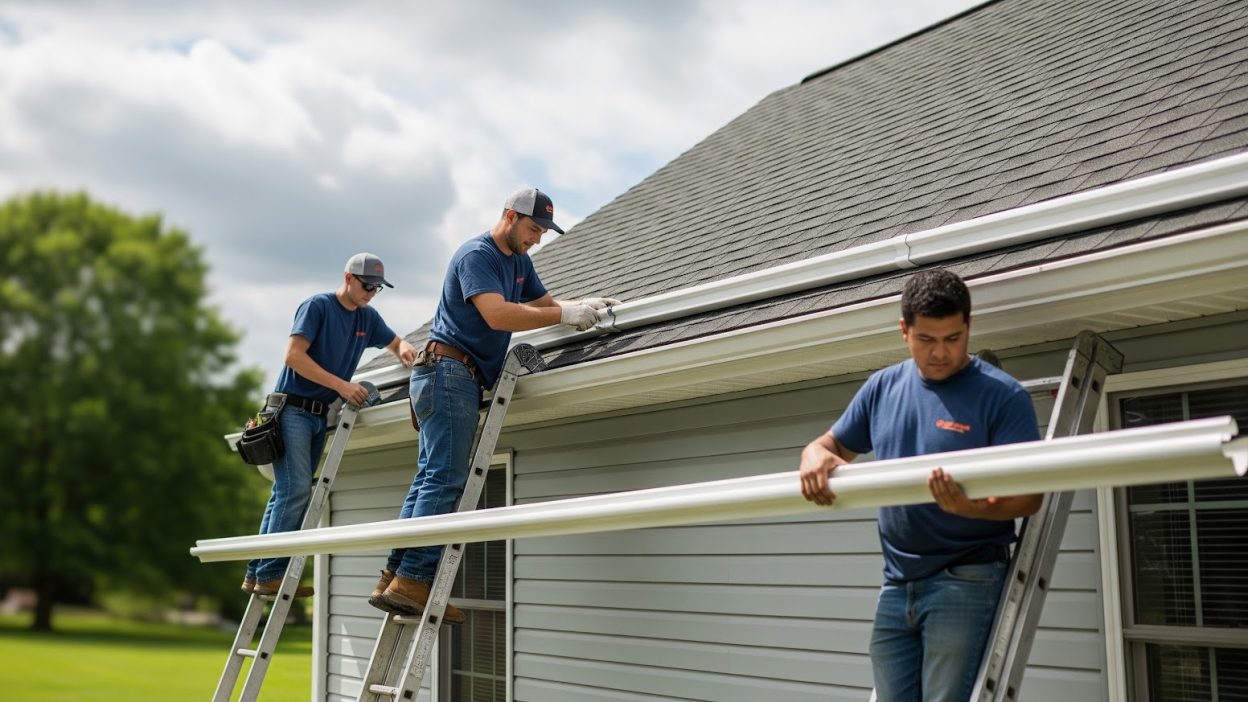
Most homeowners assume a clogged gutter just needs cleaning, but several telltale symptoms point to full replacement — and ignoring them can lead to costly foundation and siding damage. If you have been noticing water spilling over the edges, visible rust, or sagging sections after a rainstorm, you may be looking at signs you need new gutters in Cincinnati, OH rather than a simple maintenance visit. Knowing the difference between a system that needs cleaning and one that needs replacing is one of the most important decisions a homeowner can make. Professional gutter installation and replacement services exist precisely because gutters have a finite lifespan, and pushing that limit can cost far more in structural repairs than a new gutter system ever would.
This guide walks through the visual warning signs, hidden damage clues, and long-term upgrade considerations that every homeowner should understand before calling a crew.
Why Gutter Health Matters More Than Most People Realize
Gutters are the unsung workhorses of a home’s exterior. Their sole job is to channel rainwater away from the roofline, siding, and foundation. When they fail at that job, even partially, water finds its way into places it was never meant to go. According to the Insurance Information Institute, water damage and freezing are among the most common causes of homeowner insurance claims. A neglected gutter system is one of the fastest ways to accelerate that kind of damage.
The challenge is that gutter failure rarely announces itself dramatically. It tends to creep in slowly through a series of subtle symptoms that are easy to dismiss as cosmetic issues.
Visual Red Flags You Should Never Ignore
Sagging or Pulling Away from the Fascia
Gutters are designed to hang at a slight angle so water flows toward downspouts. When you see sections that are visibly drooping or pulling away from the house, it typically means one of two things: the hangers have failed, or the fascia board behind the gutter has rotted and can no longer support the weight. Replacing just the hangers without addressing the underlying wood damage is a temporary fix at best. In most cases, sagging gutters in older systems signal that the entire run needs to come down.
Rust Spots and Corrosion
Rust is not just an aesthetic problem. Once a metal gutter begins to corrode, the structural integrity of that section is compromised. Small rust spots can be patched, but widespread corrosion across multiple sections means water has been sitting inside the gutter long enough to eat through the coating. This is especially common in older galvanized steel gutters, which have a lifespan of roughly 20 years according to Bob Vila’s home maintenance resources.
Separated or Cracked Seams
Sectional gutters are assembled from multiple pieces connected at seams. Over time, those seams expand and contract through seasonal temperature swings, and eventually the sealant breaks down. You may notice water dripping straight from the seam during rain rather than flowing to the downspout. A few seam repairs may be manageable, but if separations are appearing in multiple locations, the overall system has aged past its effective lifespan.
Peeling Paint or Staining Near the Gutter Line
Paint on your home’s exterior should not be peeling near the roofline unless there is a consistent moisture source nearby. Orange streaks or peeling paint directly below gutter sections is a reliable indicator that water has been overflowing or leaking from that area repeatedly. This kind of repeated moisture exposure also begins to break down wood siding and trim boards, compounding the repair cost if left unaddressed.
Nails or Screws on the Ground
Finding hardware on the ground beneath your gutters is a clear sign the system is failing. Gutters that are continually filling with debris and water become heavier than they were designed to handle, which causes fasteners to work themselves loose over time. This is not a problem solved by re-nailing. It is a symptom of a system under ongoing stress.
Hidden Damage: What You Cannot See from the Ground
Some of the most serious gutter failures are not visible from the street. These are the warning signs that tend to get overlooked until significant structural damage has already occurred.
Pooling Water Near the Foundation
After a heavy rain, take a walk around the perimeter of your home. If you see water collecting or standing near the base of the house rather than draining away from it, your gutter and downspout system is not directing water effectively. Over time, this pooling saturates the soil around the foundation, increasing the risk of settling, cracking, and basement seepage. The American Society of Civil Engineers consistently notes that foundation drainage is among the most critical factors in long-term structural health.
Basement Moisture or Flooding
A damp basement is often traced back to surface water management failures, and gutters are a primary suspect. If your basement developed moisture problems around the same time you began noticing gutter issues, the connection is likely direct. Water that pools near the foundation eventually finds microscopic cracks in concrete and masonry, and hydrostatic pressure pushes it inward. Fixing the basement without fixing the gutters means the problem will return.
Fascia Board Rot
The fascia board runs along the edge of your roofline and provides the primary attachment point for your gutters. When gutters overflow or leak against the fascia repeatedly, the wood absorbs moisture and begins to rot from behind. By the time rot is visible from the outside, the damage behind the board is almost always more extensive. Rotted fascia boards must be replaced before new gutters can be properly installed, which is why catching gutter failure early saves significantly on total project cost.
Mold or Mildew on Siding
Mold growth on the exterior of a home tends to concentrate wherever there is a consistent source of moisture. Vertical streaks of mold or mildew below gutter sections indicate that water is routinely escaping that area and running down the siding. Beyond the cosmetic issue, mold can penetrate siding materials and begin affecting the structural sheathing beneath.
Seamless Gutters vs. Sectional Gutters: Why the Upgrade Pays Off
If your home currently has sectional gutters and replacement is necessary, this is the ideal moment to consider upgrading to a seamless system. Seamless gutters are fabricated on-site from a single continuous piece of aluminum, meaning there are no interior seams where leaks can develop. The only connection points are at the corners and downspout outlets.
For homeowners in Cincinnati, this matters more than it might in drier climates. Cincinnati receives an average of over 40 inches of rainfall annually, with concentrated heavy spring rainfalls that put significant stress on gutter systems. Sectional gutters with aging seams can fail quickly under that kind of seasonal volume.
Seamless gutters offer several practical advantages:
Fewer leak points. Without seams along the run, the most common failure point in sectional systems is eliminated entirely.
Lower long-term maintenance. Seamless systems accumulate less debris at connection points, which means fewer blockages over time.
Better curb appeal. Seamless gutters present a cleaner, more uniform appearance along the roofline.
Longer lifespan. Aluminum seamless gutters are typically rated for 20 to 30 years with proper maintenance, compared to 15 to 20 years for sectional systems.
The upfront cost of seamless gutters is modestly higher than sectional alternatives, but the reduced maintenance calls and longer service life make them a sound investment for most homeowners evaluating a full replacement.
How Long Should Gutters Last?
The answer depends on the material. Aluminum gutters, which are the most common choice in residential applications, typically last 20 years. Copper gutters can last 50 years or more but come with a significantly higher price point. Galvanized steel lands around 20 years, while vinyl gutters tend to degrade faster in climates with significant temperature variation and ultraviolet exposure.
If your gutters are approaching or past these thresholds and showing any of the symptoms described above, cleaning alone will not restore their function. At some point, continued maintenance spending on an aging system exceeds the cost of replacement.
Wrapping Up: When to Stop Cleaning and Start Replacing
Gutters that are cleaned regularly can last their full expected lifespan. But regular cleaning does not reverse physical damage, restore failed seams, or stop water from pooling at a deteriorating foundation. The signs discussed in this article, including sagging, rust, separated seams, peeling paint, fascia rot, and basement moisture, are not maintenance problems. They are structural failure indicators.
Homeowners who recognize these signs early and act on them avoid the much larger repair costs that come from foundation damage, basement remediation, and siding replacement. A full gutter replacement is a finite, manageable project. Foundation repair is not.
If your gutters are showing multiple symptoms from this list, a professional evaluation is the logical next step. A qualified contractor can assess whether a cleaning is sufficient or whether replacement is the more cost-effective path. For Cincinnati area homeowners, you can also find local gutter professionals on Google Maps to compare service providers in your area.
Frequently Asked Questions
1. How do I know if my gutters need to be replaced or just cleaned?
Cleaning is appropriate when gutters are structurally intact but clogged with debris. Replacement is necessary when you observe physical damage such as sagging, rust, cracked seams, or when cleaning fails to resolve water overflow during normal rainfall. If the same sections keep causing problems after multiple cleanings, that is a strong indicator that the system itself has failed.
2. How often should gutters be replaced?
Most aluminum gutters last 20 years with proper maintenance. Galvanized steel also averages around 20 years, while copper can last significantly longer. If your gutters are approaching these ages and showing visible wear, replacement is worth evaluating even before complete failure occurs.
3. What happens if I delay gutter replacement?
Delaying replacement allows water to continue reaching areas it should not, including fascia boards, siding, and foundation soil. The repair costs for water-damaged fascia boards, rotted siding, and compromised foundations typically far exceed the cost of a timely gutter replacement.
4. Are seamless gutters worth the extra cost?
For most homeowners, yes. Seamless gutters eliminate the most common source of gutter leaks, require less frequent maintenance, and last longer than sectional systems. In regions with heavy seasonal rainfall, the performance advantage of seamless gutters becomes even more pronounced over time.
5. Can I tell if my fascia board is rotted without removing the gutters?
Some signs of fascia rot are visible without removing gutters, including soft or spongy texture when pressed, discoloration, and paint bubbling on the board face. However, the full extent of rot is typically only apparent once gutters are removed. This is why professional gutter inspections often include a fascia assessment before installation begins.
6. Does homeowners insurance cover gutter replacement?
Standard homeowners insurance generally does not cover gutter replacement due to age or wear. However, if gutters are damaged by a covered event such as a storm, hail, or falling tree branch, the damage may be claimable depending on your policy. Consulting your insurance provider directly is the most reliable way to understand your coverage.