Ohio homeowners face a unique challenge when choosing decking materials. The state’s dramatic seasonal swings, from bitter January cold to muggy August heat, create conditions that quickly expose the weaknesses of the wrong material. Whether you are planning a backyard entertainment space or a poolside platform, understanding the composite vs. wood deck Ohio debate could save you thousands of dollars over the next decade. If you are ready to explore your options with a professional, deck installation services can help you evaluate what works best for your property, climate zone, and budget.
This guide breaks down how Ohio’s climate affects each material, what you will actually spend over 10-plus years, and which material wins for specific use cases.
How Ohio’s Climate Punishes the Wrong Decking Material
Ohio sits in a humid continental climate zone, which means it experiences four full seasons with significant temperature extremes. The Ohio Department of Natural Resources notes that the state sees average January lows dipping well below freezing across most regions, while summer humidity regularly pushes heat indices above 90 degrees Fahrenheit.
The most damaging force on any deck surface is the freeze-thaw cycle. Water seeps into small cracks or pores in a decking board, freezes, expands, and then contracts when it thaws. Over dozens of cycles per season, this process degrades structural integrity, opens gaps, and causes surface checking and splintering.
Pressure-Treated Lumber is the most widely used wood decking product in Ohio because it resists rot and insect damage. However, it is still a wood product, which means it absorbs moisture readily. Pressure-treated boards in Ohio climates commonly warp, crack, and check within three to five years without consistent maintenance. The wood requires annual cleaning and resealing to slow moisture infiltration.
Cedar is a naturally rot-resistant species with oils that provide some built-in protection. However, cedar in Ohio’s wet winters and humid summers still requires regular sealing, typically every one to two years, to maintain its appearance and structural health. Cedar that goes unsealed will gray quickly and begin to crack at the surface.
Composite Decking is engineered to resist moisture absorption. Most composite products use a combination of wood fiber and recycled plastic, capped with a protective polymer shell. This shell significantly reduces water infiltration, which means freeze-thaw cycles have far less impact on composite boards than on natural wood. According to the North American Deck and Railing Association (NADRA), composite decking has grown substantially in market share precisely because of its resilience in high-moisture and freeze-thaw environments.
Lifetime Cost Breakdown: Upfront vs. Long-Term
One of the most common mistakes Ohio homeowners make is evaluating decking costs based only on the initial price per square foot. The true cost of a deck includes installation, annual maintenance, and eventual replacement or refinishing expenses.
Pressure-Treated Lumber
Pressure-treated decking typically costs between $15 and $25 per square foot installed, making it the lowest barrier to entry. However, the ongoing costs add up significantly. Homeowners should budget for annual cleaning products and a sealant or stain every one to two years, which can run $200 to $600 per application depending on deck size. Boards that warp or crack may need spot replacement within five to seven years. Over a 15-year window, a pressure-treated deck can cost nearly as much in maintenance as the original build.
Cedar
Cedar runs higher upfront, typically $25 to $35 per square foot installed, but it shares many of the same long-term maintenance demands as pressure-treated lumber. Annual or biannual sealing is required to maintain the wood’s natural oils and prevent graying and cracking. Without consistent upkeep, cedar deteriorates faster in Ohio’s humidity than many homeowners expect.
Composite Decking
Composite decking carries the highest upfront cost, generally ranging from $35 to $60 or more per square foot installed, depending on the brand and board profile. However, composite requires minimal annual maintenance. Most manufacturers recommend only occasional soap-and-water cleaning. There is no need for annual sealing, staining, or sanding. Quality composite products carry warranties of 25 to 30 years, and many homeowners report their decks looking nearly as good after 15 years as they did on day one.
The University of Minnesota Extension has published guidance on exterior wood maintenance that highlights how moisture and UV exposure dramatically increase the long-term cost of natural wood decking, a point particularly relevant in climates like Ohio’s.
When you factor in the elimination of annual maintenance costs, composite decking often becomes the more economical choice over a 10 to 15-year horizon for Ohio homeowners.
Which Material Is Best for Specific Use Cases
The “right” material depends not just on your budget but on how you plan to use your deck and where it sits on your property.
Entertaining Deck
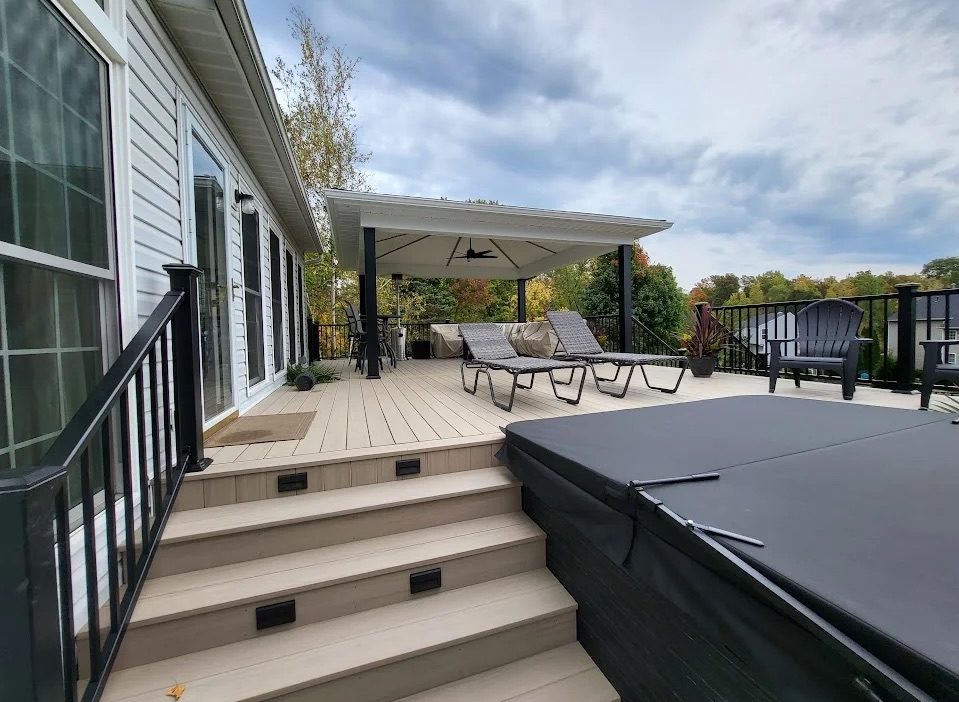
For homeowners who plan to host gatherings regularly, composite decking is the clear frontrunner. It stays cooler underfoot in summer than some all-wood options, resists staining from food and beverages, and does not splinter, which is an important safety consideration for bare feet. High-traffic entertaining decks benefit enormously from the low-maintenance nature of composite, since the surface does not need to be cleared of furniture and stripped down for annual refinishing.
If budget is a firm constraint, pressure-treated lumber with a quality deck paint or solid stain can be a reasonable alternative, provided the homeowner commits to reapplication every two years.
Pool-Adjacent Platform
Poolside decks face constant moisture exposure. Water splashing, chemical runoff from pool treatments, and near-constant dampness in the surrounding soil create ideal conditions for wood rot and mold growth. Composite decking is the strongly preferred material for pool-adjacent applications. Its moisture resistance, mold-resistant surface coatings, and non-splintering surface make it both the safer and more durable option.
Pressure-treated lumber around pools is prone to swelling, warping, and, over time, harboring mold underneath boards where moisture pools. Cedar fares somewhat better due to its natural oils, but still requires vigilant sealing near water.
Elevated Second-Story Deck
Structural integrity is paramount for elevated decks. Here, the framing material matters just as much as the decking surface. Pressure-treated lumber remains the standard for deck framing due to its strength-to-cost ratio and proven performance record. For the walking surface of an elevated deck, composite boards offer a significant safety advantage: they do not develop the surface splinters and checking that wood develops as it dries and ages at height.
Some contractors use hidden fastener systems with composite boards on elevated decks to eliminate surface screw holes that can collect water and accelerate wood decay beneath the deck surface.
Regional Considerations Specific to Ohio
Ohio’s geography creates variation in decking demands. Homeowners in Northeast Ohio near Lake Erie, including Cleveland and Akron, face heavier snowfall and more frequent freeze-thaw events than those in southern Ohio near Cincinnati, where winters are milder but summers are more intensely humid. Lake-effect moisture in the north makes composite decking especially advantageous, while southern Ohio homeowners may find a well-maintained cedar deck holds up reasonably over time.
Urban heat island effects in Columbus and other metro areas can also raise surface temperatures on dark-colored composite boards in summer. Lighter composite board colors or those with heat-dispersing technology can address this.
Making the Decision: A Practical Framework
Choosing between composite and wood comes down to three questions. What is your upfront budget flexibility? How much time and effort are you willing to invest in annual maintenance? And how long do you plan to stay in the home?
If you plan to sell within five years, a pressure-treated deck built to code may deliver acceptable return on investment. If you are building for the long term and want a surface that looks great with minimal effort, composite is the better choice for Ohio’s climate.
Consulting with a local deck installation professional who understands Ohio’s specific regional weather patterns can help you make a decision that aligns with your property, timeline, and goals.
The Bottom Line on Composite vs. Wood for Ohio Homeowners
Ohio’s freeze-thaw cycles, humid summers, and variable precipitation create a demanding environment for any outdoor structure. Pressure-treated lumber remains the most affordable entry point but demands consistent attention to maintain its appearance and structural soundness. Cedar offers natural beauty and some built-in resilience, but shares many of the same maintenance requirements in Ohio’s climate. Composite decking carries a higher upfront investment that pays off over time through dramatically reduced maintenance costs, superior moisture resistance, and long manufacturer warranties.
For most Ohio homeowners planning a deck they expect to enjoy for 10 years or more, composite decking offers the best combination of durability, safety, and long-term value. For those with tighter initial budgets who are willing to commit to annual maintenance routines, pressure-treated lumber remains a viable and widely used option.
Frequently Asked Questions
1. How often does a wood deck need to be resealed in Ohio?
Most wood decking experts recommend resealing pressure-treated lumber every one to two years in Ohio due to the state’s humidity and freeze-thaw cycles. Cedar may require sealing every one to two years as well, depending on sun and moisture exposure. Skipping sealing accelerates cracking, graying, and structural degradation.
2. Does composite decking get too hot in Ohio summers?
Composite decking can absorb heat and become warmer underfoot than natural wood on sunny days. Lighter-colored boards and composites designed with heat-reduction technology help address this. In Ohio summers, strategic shade from pergolas or trees can also reduce surface temperatures significantly.
3. Is pressure-treated wood safe around children and pets?
Modern pressure-treated lumber produced after 2004 uses copper-based preservatives and is generally considered safe for residential use around children and pets, according to the U.S. Environmental Protection Agency. Earlier formulations using arsenic-based compounds are no longer available for residential use. Sealing pressure-treated wood further reduces surface exposure to preservatives.
4. How long does a composite deck last in Ohio?
Most quality composite decking products carry 25 to 30-year warranties and are designed to maintain their structural integrity and appearance for at least that long when installed and maintained properly. Ohio’s climate is well within the tested performance parameters of major composite brands.
5. Can I install composite decking over an existing wood deck frame?
In many cases, yes. If the existing wood substructure and joists are structurally sound, composite decking boards can be installed directly over the existing framing. A qualified deck contractor should inspect the framing for rot, sagging, or damage before installation. In Ohio, it is also important to check joist spacing, as some composite board products require closer joist spacing than standard lumber decking to prevent flex.