If you have noticed a weak, slow trickle coming from your faucet, dealing with low water pressure in a bathroom sink in Cincinnati, OH can be frustrating. The good news is that this problem is often something you can diagnose yourself before calling a plumber. In many cases, the culprit is a clogged aerator or a partially closed shut-off valve hiding right under your vanity. That said, low pressure can sometimes signal a deeper plumbing issue worth taking seriously. If you need professional help, a qualified bathroom plumbing specialist can walk you through the next steps.
This guide covers everything you need to know, from the most common causes to when it is time to bring in an expert.
Why Is Water Pressure Low in Just One Sink?
When low water pressure is isolated to a single bathroom sink, that is actually useful information. It tells you the issue is almost certainly localized rather than a whole-house problem. A widespread pressure drop affecting multiple fixtures usually points to something at the municipal supply level or a major issue with the main line. A single-fixture problem narrows the list considerably.
The most likely suspects, in order of how often they show up, include a clogged aerator, a partially closed shut-off valve, a kinked or damaged supply line, or corroded plumbing components. Each of these is worth investigating in sequence before drawing any conclusions.
The Aerator: The Most Common Cause
The aerator is the small mesh screen screwed onto the tip of your faucet. Its job is to mix air into the water stream, which reduces splashing and conserves water without affecting the feel of the flow. Over time, mineral deposits, sediment, and debris accumulate in this screen and restrict water from passing through freely.
How Cincinnati’s Hard Water Makes This Worse
Cincinnati’s water supply is considered moderately to significantly hard, meaning it carries elevated levels of dissolved calcium and magnesium. According to the United States Geological Survey, hard water leaves behind mineral scale wherever it flows. In a faucet aerator, this buildup happens faster than most homeowners expect, sometimes within months of installation or cleaning.
The result is a gradual reduction in flow that creeps up on you. One day the pressure seems a bit low; a few weeks later, the stream is barely more than a trickle. Cleaning or replacing the aerator regularly is one of the simplest and most effective forms of faucet maintenance in a hard-water region like Cincinnati.
How to clean the aerator:
- Unscrew the aerator from the faucet tip. You may be able to do this by hand, or you might need pliers with a cloth wrapped around the aerator to protect the finish.
- Disassemble the small parts carefully, noting their order.
- Soak all components in white vinegar for 30 minutes to an hour to dissolve mineral deposits.
- Scrub gently with an old toothbrush, rinse thoroughly, and reassemble.
- If the aerator is cracked, warped, or the mesh is damaged beyond cleaning, replace it. Aerators are inexpensive and widely available at hardware stores.
After reinstalling the aerator, turn on the faucet and check whether pressure has improved. In many cases, this single step resolves the problem entirely.
Checking the Shut-Off Valves and Supply Lines
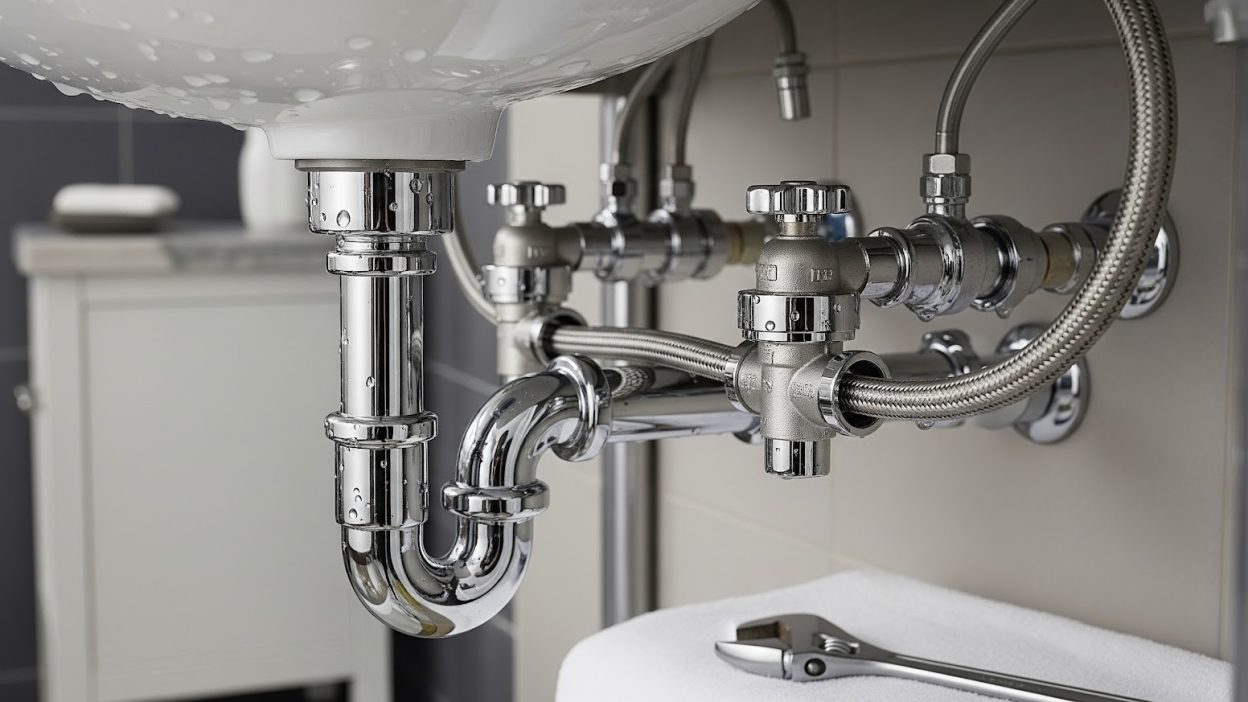
If cleaning the aerator does not restore normal pressure, the next step is to look under the sink. You will find two small shut-off valves (also called angle stop valves or fixture valves) connected to the water supply lines, one for hot water and one for cold. These valves allow you to turn off water to the sink without shutting off the whole house.
Sometimes these valves are not fully open. This can happen accidentally during a previous repair, after moving into a home where the prior owners partially closed them, or because the valve is slowly failing. Turn each valve counterclockwise until it stops to make sure it is fully open.
While you are under there, inspect the supply lines themselves. These flexible braided lines connect the shut-off valves to the faucet. Look for any kinks, bends, or signs of damage. A kinked supply line can restrict flow almost as effectively as a closed valve. If a line is damaged or kinked in a way that cannot be straightened, replacing it is straightforward and inexpensive.
According to This Old House, supply lines and shut-off valves are among the most common sources of plumbing headaches and are worth inspecting regularly as part of routine home maintenance.
When Low Pressure Points to a Bigger Problem
Most of the time, low pressure at a single sink traces back to the aerator or valves. But occasionally, the issue reflects something more serious happening in your home’s plumbing system. Here are a few scenarios worth knowing about.
Corroded or Galvanized Pipes
Older homes in the Cincinnati area, particularly those built before the 1970s, sometimes still have original galvanized steel pipes. Over decades, these pipes corrode from the inside out. Mineral scale, rust, and debris accumulate along the interior walls, gradually narrowing the passage through which water can flow. If your home has galvanized plumbing and multiple fixtures are beginning to show reduced pressure, the pipes themselves may be the source of the problem.
Replacing galvanized pipes with modern copper or PEX piping is a significant project but one that dramatically improves water quality and pressure throughout the home. This is not a DIY undertaking for most homeowners and warrants a conversation with a licensed plumber.
A Failing Pressure Regulator
Many homes have a pressure-reducing valve (PRV) installed where the main water line enters the house. This device keeps incoming water pressure within a safe range, typically between 40 and 60 psi. If the PRV is failing, it may deliver inconsistent pressure throughout the house, which can show up as low flow in one or more fixtures.
You can test your home’s water pressure using an inexpensive gauge that attaches to an outdoor hose bib. The Environmental Protection Agency recommends household water pressure be maintained at appropriate levels for both efficiency and fixture longevity. If your reading is significantly below 40 psi and your aerator and valves check out fine, the PRV may need adjustment or replacement.
Partially Blocked Faucet Cartridge or Valve Seat
Inside cartridge-style faucets, sediment and mineral deposits can also build up in the cartridge itself, restricting flow before the water even reaches the aerator. If cleaning the aerator and opening the shut-off valves does not help, the faucet cartridge may need to be removed, cleaned, or replaced. Many faucet manufacturers publish cartridge replacement guides specific to their models, and most hardware stores stock common replacement cartridges.
Step-by-Step Diagnostic Summary
Working through the problem methodically saves time and avoids unnecessary expense. Start with the simplest fix and move down the list only if needed.
First, remove and clean or replace the aerator. This alone solves the problem in the majority of cases. Second, check both shut-off valves under the sink and make sure they are fully open. Third, inspect the supply lines for kinks or damage and replace them if necessary. Fourth, if the faucet has a cartridge, check it for buildup or damage. Fifth, if none of the above resolves the issue, consider having a plumber assess for corroded pipes, PRV failure, or other systemic issues.
Preventing the Problem in the Future
In a hard-water city like Cincinnati, prevention comes down to regular maintenance. Clean or replace your aerators every six to twelve months. If you want to reduce mineral buildup throughout your plumbing system, a whole-house water softener is worth considering. These systems remove the calcium and magnesium that cause scale, extending the life of fixtures and water heaters.
Wrapping Up: Most Low-Pressure Problems Are Fixable at Home
Low water pressure at a single bathroom sink is rarely a crisis, but it is worth addressing promptly. Left alone, a clogged aerator can strain the faucet and make daily tasks genuinely frustrating. The good news is that most homeowners in Cincinnati can diagnose and fix this issue in under an hour with basic tools and a trip to the hardware store.
Start with the aerator. Check your valves. Inspect your supply lines. These three steps address the vast majority of single-fixture pressure problems without professional help. If you work through those and still have weak flow, or if you suspect an issue with your pipes or pressure regulator, consult a licensed plumber who can assess the situation and recommend the right solution.
For residents dealing with persistent plumbing issues, you can also find local service information on Google Maps to connect with trusted local professionals in the Cincinnati area.
Frequently Asked Questions
1. What is the most common cause of low water pressure in a bathroom sink?
The most common cause is a clogged aerator. The small mesh screen at the faucet tip collects mineral deposits and sediment over time. In hard-water areas like Cincinnati, this buildup happens quickly and can significantly reduce flow. Cleaning or replacing the aerator is always the first diagnostic step.
2. How do I know if the problem is just my sink or my whole house?
Check other fixtures throughout your home. If pressure is normal everywhere else, the problem is isolated to that one sink. If pressure is low throughout the house, the issue likely lies with the main supply line, the pressure regulator, or the municipal water supply.
3. Can hard water really cause that much buildup in a faucet?
Yes. Cincinnati’s water supply contains elevated levels of dissolved calcium and magnesium. These minerals form hard scale deposits wherever water flows, and in aerators this buildup is especially concentrated. Regular cleaning every six to twelve months is a practical maintenance schedule for most Cincinnati households.
4. How do I test my home’s water pressure?
Purchase an inexpensive water pressure gauge from a hardware store and attach it to an outdoor hose bib. A reading between 40 and 60 psi is normal. Below 40 psi suggests a supply issue or failing pressure regulator, while above 80 psi can damage fixtures and appliances.
5. When should I call a plumber instead of trying to fix it myself?
Call a plumber if cleaning the aerator, opening the shut-off valves, and inspecting the supply lines do not resolve the issue. You should also seek help if you notice discolored water, suspect corroded pipes, or think the pressure-reducing valve may be failing. These are signs of systemic problems that require proper diagnosis.