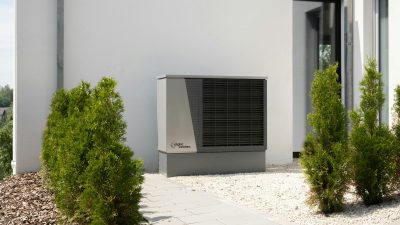
It is late January in Ohio. The temperatures have dropped well below freezing, and you are standing in front of your vents waiting for relief. Instead of warm air, you feel a lukewarm or even cool breeze coming through. If your system is experiencing a heat pump blowing cold air in heat mode in Ohio, you are not alone, and in many cases the problem is fixable without an expensive service call.
Getting heat pump repair handled quickly matters most during cold snaps, but before you pick up the phone it helps to know whether your system is truly malfunctioning or simply doing something that is completely normal for this type of equipment. This guide walks through the seven most common causes, which ones you can address yourself in five minutes, and which ones require a licensed HVAC technician.
How Heat Pumps Work Differently from Furnaces
A gas or electric furnace burns fuel or uses resistance coils to create heat that can reach 120 to 140 degrees Fahrenheit at the supply register. A heat pump works on a completely different principle. Instead of generating heat, it transfers heat energy from the outdoor air into your home using refrigerant. Even on a cold Ohio day, outdoor air still contains heat energy that can be extracted and moved inside.
Because of this process, air coming out of a heat pump register typically measures between 85 and 95 degrees Fahrenheit, which is noticeably cooler than furnace output. When you hold your hand over a vent, that temperature can feel cool or even lukewarm compared to what you may be used to from a furnace. This is normal operation. The system is still heating your home, just more gradually and at a lower air temperature.
If the air feels only slightly less warm than expected, your system may be working exactly as it should. If the air feels genuinely cold, closer to room temperature or below, then one of the following issues is likely the cause.
The 7 Most Common Causes
1. Thermostat Set to “Cool” or “Fan Only”
This is the most overlooked cause and the easiest fix. Someone in the household may have accidentally switched the thermostat to cooling mode or to fan-only mode. In fan-only mode, the blower circulates unconditioned air through the ducts without heating it at all, which produces exactly the sensation of cold air blowing from the vents.
What to do: Check your thermostat settings. Make sure it is set to “Heat,” not “Cool” or “Fan Only.” If you have a programmable or smart thermostat, check that no scheduled programming is overriding your manual settings.
2. Clogged or Dirty Air Filter
A severely clogged air filter restricts airflow across the indoor coil. When airflow is restricted, the system cannot transfer heat efficiently into your living space. In some cases, reduced airflow can cause the indoor coil to ice over, which further blocks heat transfer and results in cold or barely warm air at the registers.
What to do: Check your air filter. If it looks grey, matted, or visibly dirty, replace it. Most standard 1-inch filters should be changed every 30 to 90 days depending on household conditions. According to the U.S. Department of Energy, replacing a clogged filter can improve system efficiency by 5 to 15 percent.
3. Tripped Outdoor Disconnect or Breaker
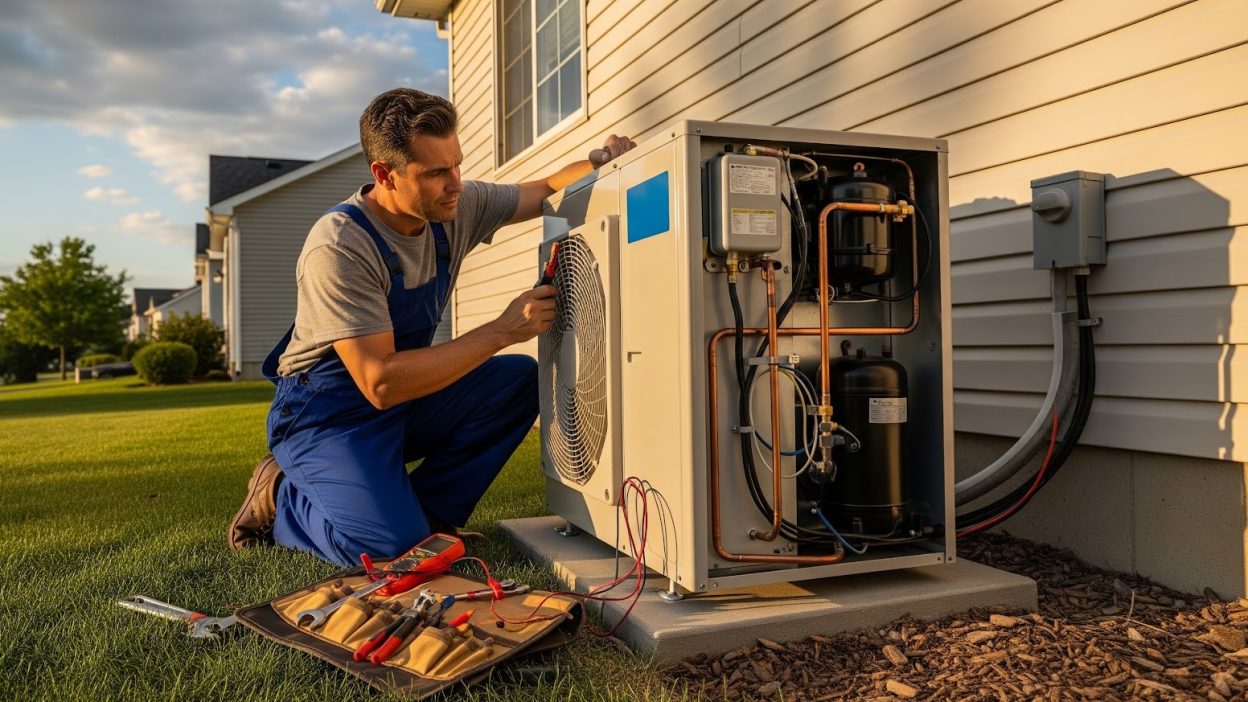
Heat pumps have an outdoor disconnect switch, typically a box mounted near the outdoor unit, as well as a dedicated circuit breaker in your electrical panel. If either of these has tripped or been accidentally switched off, the outdoor unit will not run. Without the outdoor unit, the system cannot extract heat, and the indoor fan may continue blowing air that has not been conditioned.
What to do: Inspect the outdoor disconnect box to confirm it is in the “on” position. Then check your breaker panel for any tripped breakers. A tripped breaker will be positioned between on and off. Reset it once. If it trips again immediately, stop and call an electrician or HVAC technician, as a repeatedly tripping breaker signals a more serious electrical problem.
4. The System Is in Defrost Mode
Heat pumps go through automatic defrost cycles to melt ice that accumulates on the outdoor coil during cold weather. During a defrost cycle, which typically lasts 5 to 15 minutes, the system temporarily reverses operation to send warm refrigerant to the outdoor coil. This means the indoor unit is briefly working in a mode that does not produce warm air. Many systems also activate auxiliary electric heat strips during defrost to compensate, but if those strips are not working, you will feel cool air during the defrost period.
What to do: Wait 10 to 15 minutes. If the system returns to normal heating operation after that window, defrost cycles are the likely explanation and no repair is needed. If the system seems to be stuck in defrost for more than 30 minutes, continue reading.
5. Low Refrigerant
Refrigerant is the substance that carries heat energy between the indoor and outdoor coils. If your system has a refrigerant leak, the heat transfer process breaks down. With low refrigerant, the heat pump cannot extract enough heat from the outdoor air to adequately warm your home. You may notice lukewarm air, longer run times with little temperature gain, ice buildup on the outdoor unit, or a hissing sound near the refrigerant lines.
What to do: This requires a licensed HVAC technician. Refrigerant cannot be purchased or added by homeowners. A technician will use gauges to measure system pressure, identify the leak location, make repairs, and recharge the system to manufacturer specifications. The Environmental Protection Agency requires certification to handle refrigerants, so this is strictly a professional job.
6. Stuck or Faulty Reversing Valve
The reversing valve is the component that literally switches your heat pump between heating and cooling mode by changing the direction refrigerant flows through the system. If this valve gets stuck in the cooling position, your heat pump will continue to cool your home even when the thermostat is set to heat. This is a straightforward diagnosis for a technician but not something a homeowner can address.
Symptoms of a stuck reversing valve include: the system blows cold air in heat mode, the outdoor unit behaves as if it is running in summer, and the refrigerant pressures are reversed when measured with gauges.
What to do: Contact an HVAC technician for diagnosis. Reversing valve replacement is a moderate repair that involves recovering refrigerant, unsoldering the valve, installing a new one, and recharging the system.
7. Failed Defrost Control Board
If the defrost control board fails, the system may get stuck in defrost mode indefinitely, or it may never initiate a defrost cycle, allowing ice to accumulate on the outdoor coil until it becomes fully blocked. A completely iced-over outdoor coil cannot absorb heat, which results in cold air at the indoor registers.
Signs of a failed defrost board include a heavily iced outdoor unit even after extended operation, defrost cycles that never complete, or a system that goes into defrost every few minutes rather than at normal intervals.
What to do: A technician will test the defrost board and sensors with diagnostic tools. If the board has failed, replacement is typically straightforward, but the specific part must match your unit’s make and model.
Quick DIY Checklist Before You Call
Before scheduling a service visit, run through these steps in order:
- Confirm the thermostat is set to “Heat” and the target temperature is above the current room temperature.
- Check that the system mode is not set to “Fan Only” or “Emergency Heat” unintentionally.
- Replace the air filter if it has not been changed recently.
- Check the outdoor disconnect switch and the circuit breaker panel.
- Observe whether the outdoor unit is running. If it is completely coated in ice and not cycling off, that is a sign of a defrost problem.
- Wait through a potential defrost cycle before calling if conditions are below 35 degrees Fahrenheit.
If none of these steps resolve the issue, it is time to contact a professional.
When Ohio Winters Make It Worse
Ohio’s climate presents particular challenges for heat pump efficiency. Standard air-source heat pumps lose efficiency as outdoor temperatures drop, and they struggle to extract sufficient heat once temperatures fall below 25 to 30 degrees Fahrenheit. Most systems are paired with auxiliary or backup heat strips that automatically activate in very cold conditions. If those backup heat elements have failed, the system will underperform significantly during the coldest periods.
If your home is not reaching the set temperature during a cold snap but the air feels somewhat warm, the backup heat element may be the issue rather than the heat pump itself. A technician can test the strip heaters during a service visit.
Wrapping Up: Know When to Act
Understanding the difference between normal heat pump behavior and a genuine malfunction can save you both money and discomfort. If the air feels lukewarm but your home is reaching the set temperature, your system is likely operating normally. If the air feels genuinely cold, your home is not warming up, or the outdoor unit is iced over and not recovering, one of the seven problems covered above is the probable cause.
Three of these causes are quick DIY fixes any homeowner can handle in minutes. The remaining four require a licensed HVAC professional with proper tools and certifications. Acting early before a small refrigerant leak or a failing defrost board causes additional damage will keep repair costs lower and ensure your system is ready for the next cold night.
For professional diagnosis and repair of heat pump issues in the Ohio area, you can also locate trusted local HVAC service providers on Google Maps to compare ratings and schedule service quickly.
Frequently Asked Questions
Q1: Is it normal for a heat pump to blow cool air sometimes?
Yes. Heat pump air typically registers between 85 and 95 degrees Fahrenheit at the supply vent, which feels noticeably cooler than furnace air at 120 to 140 degrees. If your home is reaching its set temperature, the system is likely working correctly even if the air feels less warm than you expect. Cool air during a defrost cycle, which lasts 5 to 15 minutes, is also completely normal.
Q2: Why does my heat pump blow cold air when it is very cold outside?
Heat pumps extract heat from outdoor air, and that process becomes less efficient as temperatures drop. Below about 25 to 30 degrees Fahrenheit, most standard heat pumps need to rely on auxiliary or backup heat strips to maintain comfortable indoor temperatures. If those backup elements have failed or are not activating, you may experience inadequate heating during extreme cold. Low refrigerant and a frozen outdoor coil can also cause poor performance in cold weather.
Q3: How do I know if my heat pump is stuck in defrost mode?
A normal defrost cycle runs for 5 to 15 minutes. If your outdoor unit has been coated in ice for more than an hour without clearing, or if you notice the system repeatedly switching into what sounds like reversed operation every few minutes, the defrost control board or sensors may have failed. A technician can run a diagnostic to confirm.
Q4: Can I add refrigerant to my heat pump myself?
No. Handling refrigerants requires EPA Section 608 certification. Attempting to add refrigerant without the proper training and equipment can damage the system, create safety hazards, and result in legal penalties. A licensed HVAC technician will identify the leak, repair it, and recharge the system to the correct pressure specified by the manufacturer.
Q5: How often should I replace my heat pump air filter to avoid heating problems?
For standard 1-inch filters, every 30 to 90 days is the typical recommendation depending on factors like pets, household dust levels, and system run time. During heavy heating season in Ohio, checking the filter monthly is a good habit. Thicker 4-inch media filters can last 6 to 12 months. Always follow the filter manufacturer’s guidance and replace sooner if the filter appears visibly dirty or grey.