Choosing the right roofing membrane for a commercial building in Florida is one of the most consequential decisions a property owner can make. When it comes to TPO vs. EPDM commercial roofing in Sarasota, FL, both options are widely used, both carry strong reputations, and both can last decades when properly installed. Yet they perform very differently under the specific pressures of the Florida climate — intense UV radiation, hurricane-force wind uplift, coastal salt air, and roof traffic from HVAC technicians. Understanding those differences in practical terms helps building owners move past marketing language and make a genuinely informed investment decision.
For property owners evaluating flat or low-slope roofing systems, working with an experienced commercial roofing contractor is the most reliable starting point — but an educated client always gets better outcomes. This guide breaks down performance, cost, and longevity across both systems with Florida conditions in mind.
What Are TPO and EPDM Membranes?
Both systems fall under the category of single-ply roofing membranes, meaning the waterproofing layer is a single sheet of flexible material mechanically fastened, adhered, or ballasted to the roof deck.
TPO (Thermoplastic Polyolefin) is a white or light-colored membrane made from a blend of polypropylene and ethylene-propylene rubber. It became popular in the early 2000s and is now one of the most installed commercial roofing products in the United States according to the National Roofing Contractors Association (NRCA).
EPDM (Ethylene Propylene Diene Monomer) is a synthetic rubber membrane that has been in widespread commercial use since the 1960s. It is most commonly black, though white and gray versions exist. Its long track record is one of its defining selling points.
Performance Differences in Florida Heat
Florida’s climate is punishing in ways that differ substantially from northern states. Average high temperatures from May through September regularly exceed 90 degrees Fahrenheit, and UV exposure indexes in Sarasota rank among the highest in the continental United States. Roofing membranes need to handle not just temperature but sustained solar radiation, humidity, and frequent thermal cycling.
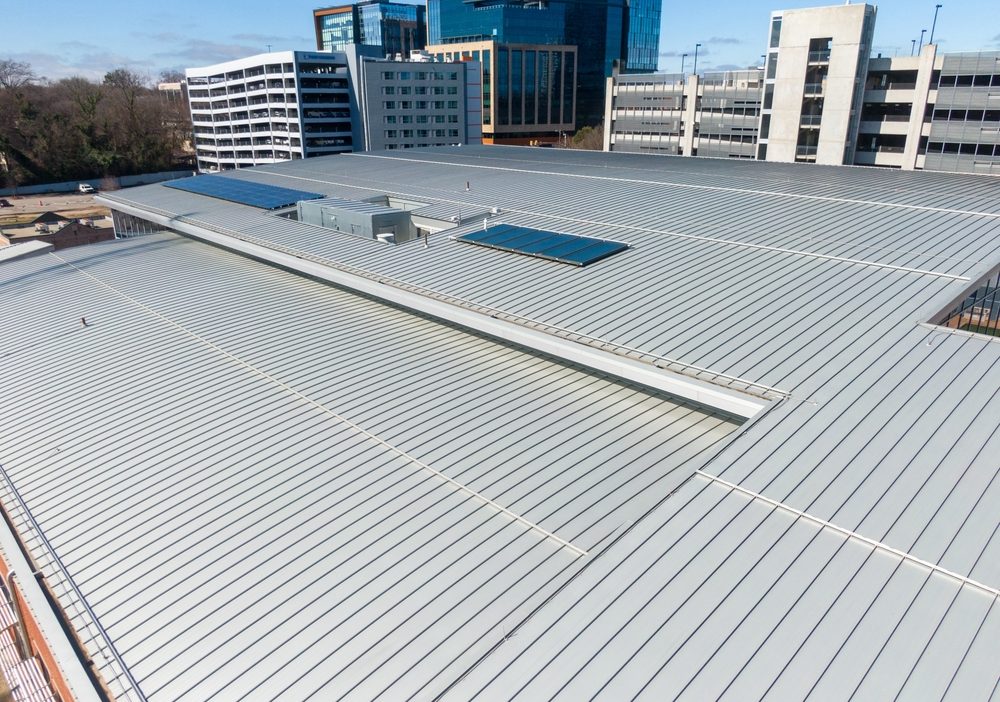
TPO’s reflective advantage is significant here. A standard white TPO membrane typically reflects 70 to 80 percent of solar radiation, helping reduce rooftop surface temperatures and lowering the thermal load on the building below. The U.S. Department of Energy’s ENERGY STAR program recognizes cool roofing products including many TPO membranes for their ability to reduce cooling energy consumption, which matters enormously for Florida commercial buildings running air conditioning virtually year-round.
EPDM, particularly in its standard black form, absorbs rather than reflects solar radiation. Black EPDM can reach surface temperatures of 150 to 170 degrees Fahrenheit on a hot Florida afternoon. That said, EPDM has demonstrated exceptional UV resistance over decades of field performance. The rubber compound holds up well without cracking or becoming brittle, even after prolonged sun exposure. White EPDM versions close some of the energy efficiency gap with TPO, though they are less common and carry a higher material cost.
For Florida building owners prioritizing energy savings, TPO has a clear edge. For building owners who value proven long-term UV durability, EPDM’s track record stretching back more than 50 years carries real weight.
Installation, Seam Integrity, and Wind Uplift Resistance
Seams are the most vulnerable part of any single-ply roofing system. A membrane that fails at its seams admits water regardless of how well the field sheet performs.
TPO seams are heat-welded, meaning a hot-air welding machine fuses the overlapping sheets together into a single continuous bond. When done correctly by a trained installer, heat-welded TPO seams are extremely strong and effectively waterproof. Independent testing by organizations like FM Global has confirmed that properly welded TPO seams can exceed the tensile strength of the membrane itself. However, quality is highly dependent on installer skill and equipment calibration. Poor welds — too hot, too cool, or done in adverse weather conditions — can produce weak seams that fail prematurely.
EPDM seams are bonded using adhesive or seam tape, a method that has improved considerably over the years but is generally considered more vulnerable to long-term delamination than heat-welded TPO. Seam tape systems have addressed many of the early adhesive problems, but EPDM seams still represent a maintenance point that requires periodic inspection.
For coastal Sarasota properties, wind uplift is a serious concern. Both systems can be specified to meet Florida Building Code wind uplift requirements, but the attachment method matters. Mechanically fastened systems using approved plates and fasteners provide strong uplift resistance for both TPO and EPDM. Fully adhered systems offer excellent resistance as well and eliminate the risk of fastener pullout. Building owners should confirm that any proposed system carries an FM or UL listing appropriate for their wind zone.
Foot traffic and puncture resistance favor TPO modestly. The reinforced fabric scrim embedded in most TPO membranes provides better resistance to puncture from foot traffic, dropped tools, and hail compared to standard EPDM. Commercial rooftops that see frequent maintenance visits from HVAC contractors benefit from this added durability.
Lifecycle Cost Comparison Over 20 Years
Short-term installation cost is often the first thing property owners ask about, but lifecycle cost is the more relevant figure for a membrane expected to last two decades.
Initial installation costs for TPO and EPDM are comparable, typically ranging from $5 to $9 per square foot depending on roof complexity, attachment method, insulation requirements, and regional labor rates. EPDM can run slightly lower on large simple roofs due to material costs, while TPO may cost slightly more per square foot in some markets.
Energy savings over time can tip the 20-year calculation significantly in favor of TPO in Florida. A well-documented reduction in cooling energy consumption of 15 to 20 percent for cool roofing systems versus traditional dark roofing translates to meaningful annual savings for large commercial buildings with high HVAC loads. The Oak Ridge National Laboratory has published research supporting the energy benefits of reflective roofing in hot climates, and Florida’s long cooling season amplifies those benefits.
Maintenance frequency for both systems is relatively low when the initial installation is sound. TPO should be inspected annually, with particular attention to seams, penetrations, and flashings. EPDM likewise requires annual inspection, with emphasis on seam tape and adhesive integrity around edges and penetrations. Neither system demands intensive ongoing maintenance under normal conditions.
Warranty coverage for both systems is offered at 10, 15, and 20-year terms by major manufacturers including Carlisle, Firestone, GAF, and others. Extended warranty terms typically require that installation be performed by a certified contractor and that an inspection be completed at the time of installation. Reviewing warranty exclusions carefully is important, as wind speed limits and installation requirements vary.
Silicone roof coatings can extend the useful life of either membrane system by an additional 10 to 15 years when applied at the right stage of the membrane’s lifecycle. A silicone coating adds a UV-resistant, waterproof layer over the existing membrane, restoring reflectivity on aged TPO and providing additional protection for EPDM seams. Applying a coating when a membrane still has structural integrity remaining is significantly more cost-effective than full replacement, and many coating systems carry their own 10-year warranties.
Florida-Specific Considerations
Sarasota’s coastal location introduces salt air exposure that accelerates degradation of metal components including fasteners, drains, and flashings. Both TPO and EPDM are themselves resistant to salt air, but the surrounding components deserve attention during specification. Stainless steel or coated fasteners and aluminum flashings outperform standard galvanized components in coastal environments.
Hurricane preparedness is non-negotiable. Any membrane installation in Florida should be designed to comply with the Florida Building Code’s wind uplift requirements for the specific wind zone, roof height, and building occupancy classification. Edge metal and flashings are disproportionately vulnerable to wind uplift and warrant premium-grade components regardless of which membrane is chosen.
Final Verdict: Making the Right Choice for Your Building
The straightforward summary is this: TPO generally makes more sense for Florida commercial buildings where energy efficiency is a priority and the roof is relatively simple with limited penetrations. EPDM makes more sense where a proven long-term track record matters most, where the building owner prefers a system with decades of real-world performance data, or where white TPO’s heat-welding requirements raise concerns about installer availability or quality control.
Neither system is universally superior. The right answer depends on the specific building, its use, its location, and the experience of the installing contractor. Consulting with a qualified commercial roofing professional who regularly works with both systems in the Florida market is the most reliable way to get an objective recommendation tailored to a specific property.
Wrapping It Up: Which Membrane Wins for Sarasota Commercial Properties?
Both TPO and EPDM are legitimate, proven solutions for commercial flat and low-slope roofing in Florida. TPO offers a clear advantage in energy reflectivity and seam strength when installed correctly, making it a strong fit for energy-conscious building owners in Sarasota’s intense heat. EPDM brings a longer track record, reliable UV resistance, and a somewhat simpler installation process that reduces the risk of poor seam quality.
For most new commercial roofing projects in Florida today, TPO is the more commonly specified system, and for good reason. But building owners who are replacing an existing EPDM roof that has performed well should not assume that switching is automatically better. A silicone coating on a sound EPDM membrane may deliver better value than a full replacement in many cases.
The 20-year lifecycle cost, energy performance, and installer expertise in your local market should drive the decision, not the upfront price alone.
Frequently Asked Questions
Q: How long does TPO roofing last on a commercial building in Florida?
A: TPO roofing properly installed and maintained typically lasts 20 to 30 years in Florida conditions. Lifespan depends on membrane thickness (standard options are 45, 60, and 80 mil), quality of seam welding, and how well the roof is maintained over time. Thicker membranes generally outperform thinner ones on roofs with regular foot traffic.
Q: Is EPDM or TPO better for energy efficiency in a hot climate?
A: TPO is generally better for energy efficiency in hot climates like Florida. Standard white TPO reflects a high percentage of solar radiation, reducing rooftop surface temperatures and lowering cooling loads inside the building. Black EPDM absorbs heat, though white EPDM versions are available for building owners who prefer EPDM but want improved energy performance.
Q: What causes TPO roofing to fail prematurely?
A: The most common cause of premature TPO failure is poor seam welding during installation. Seams that are under-welded or over-welded can delaminate over time, allowing water infiltration. Other causes include improper flashing installation around penetrations and drains, inadequate fastener patterns for wind uplift, and use of incompatible products during repairs.
Q: Can a silicone coating be applied over EPDM or TPO roofing?
A: Yes, silicone coatings can be applied over both EPDM and TPO membranes when the existing membrane is structurally sound and properly prepared. Silicone coating extends the useful life of the existing membrane, restores reflectivity, and adds an additional waterproofing layer. It is a cost-effective alternative to full replacement when the underlying membrane still has integrity.
Q: How do I know if my commercial roof needs replacement versus repair?
A: A professional roof inspection is the most reliable way to answer this question. Signs that generally indicate a replacement is more cost-effective than ongoing repair include widespread seam delamination, multiple active leaks, significant ponding water indicating structural deck issues, membrane shrinkage pulling away from edges, and a membrane age beyond its warranted life. Isolated leaks and minor punctures are typically repairable without full replacement.
Q: What is the wind uplift requirement for commercial roofs in Sarasota, Florida?
A: Sarasota County falls within a high-velocity wind zone under the Florida Building Code. Specific requirements depend on building height, roof zone, and occupancy classification. Commercial roofing systems must carry FM or UL listings meeting the required uplift pressures for the specific project. A licensed roofing contractor or engineer can determine exact requirements for a given building.