Few things are more unsettling in the kitchen than a gas stove that keeps clicking but refuses to ignite. That repetitive clicking sound combined with no flame can feel alarming, especially when natural gas is involved. If you are dealing with a gas stove clicking but not lighting in Cincinnati, OH, you are not alone. This is one of the most common service calls that appliance technicians receive, and in many cases, the fix is something you can handle yourself with a few minutes and some basic household tools. However, knowing when to stop and call a professional for stovetop repair is just as important as knowing how to troubleshoot.
This guide walks you through the most likely causes of the problem, the safety steps you should always take first, and the clear signs that the issue requires a licensed technician.
Start Here: Gas Safety Before You Do Anything Else
Before you touch a single burner cap or wipe down an igniter, take a moment to assess the situation from a safety perspective. A clicking stove is usually not a gas emergency, but it is smart to rule one out before you begin.
Do you smell gas? Natural gas has a distinctive sulfur or rotten egg odor added by utility companies specifically so leaks can be detected. If you smell gas anywhere in your kitchen, do not attempt any troubleshooting. Leave the house immediately, avoid using any electrical switches or devices, and call your gas utility provider or 911 from outside. According to the American Gas Association, even small indoor gas leaks can create dangerous conditions if ignition sources are present.
No gas smell? That is a good sign. In most clicking-without-ignition situations, the problem is mechanical or electrical rather than a gas supply issue. Still, it is reasonable to turn off the individual burner knob completely and let the area ventilate for a minute or two before you begin inspecting anything.
With safety confirmed, you can move on to diagnosing the actual problem.
The Three Most Common Causes
1. Wet or Dirty Igniters
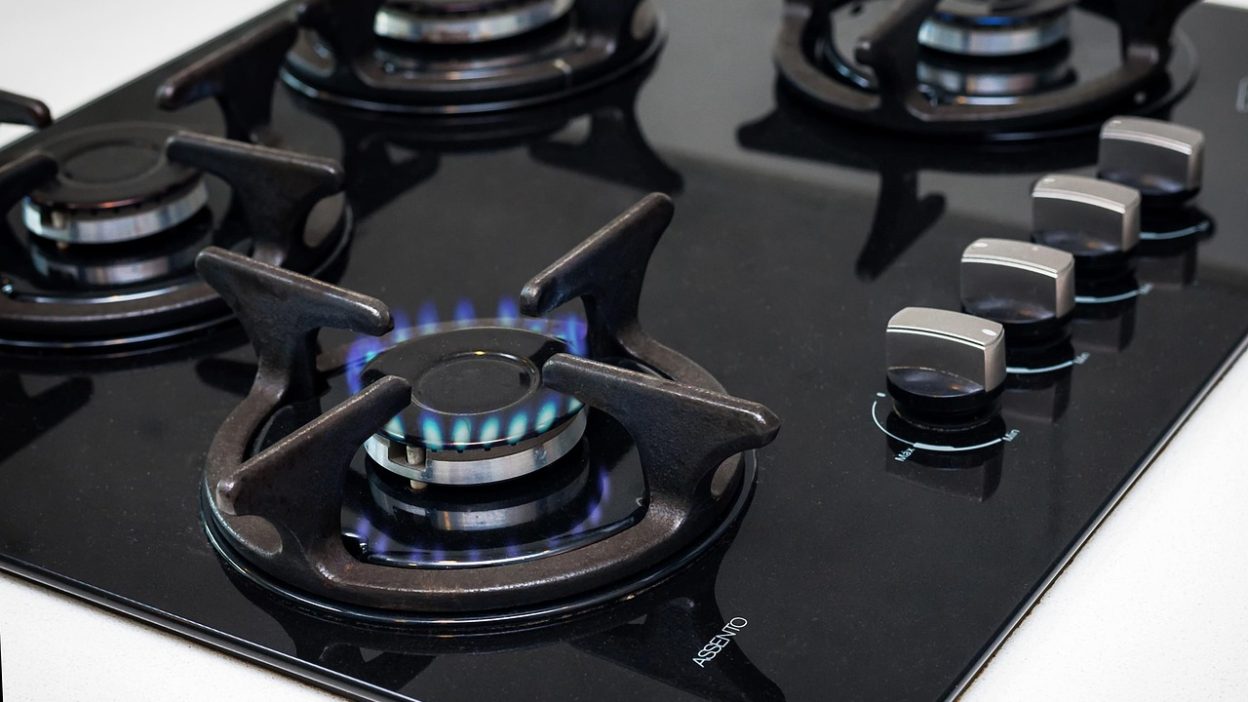
This is the number one cause of a gas burner that clicks but will not light, and it is almost always the result of a spill, a recent cleaning session, or high kitchen humidity. The igniter is the small ceramic nub located at the center of each burner. When it gets wet or coated with food residue, it cannot produce a strong enough spark to ignite the gas.
How to check: Look at the igniter directly. Does it appear wet, discolored, or coated in grease or food debris? If the clicking is happening on a burner you recently cleaned, moisture is very likely the culprit.
What to do: Use a dry toothbrush or a soft brush to gently scrub around the base of the igniter. Avoid using metal tools, which can damage the ceramic. If the igniter looks wet, you can use a dry cloth to absorb visible moisture and then let it air dry for 15 to 30 minutes. For stubborn buildup, a cotton swab lightly dipped in rubbing alcohol can help break down grease. Once everything is dry, try lighting the burner again.
According to Consumer Reports, moisture-related igniter issues are so common that they recommend never cleaning burner components and then immediately trying to use the stove.
2. Misaligned Burner Caps
Every gas burner has a cap that sits directly on top of the burner head. Its job is to distribute gas evenly around the flame ring. If this cap is even slightly off-center, which happens easily after cleaning or after a pot boils over, the gas flow can be disrupted and the burner will fail to light even when the igniter sparks normally.
How to check: Remove the burner grate and look at how the burner cap is sitting. It should be level and centered directly over the burner base. If it looks tilted, shifted to one side, or if there is any visible gap between the cap and the burner head, that is your problem.
What to do: Simply lift the cap off entirely, inspect it for any cracks or warping, and reseat it carefully so it sits flat and centered. You should feel or hear a faint click or settle when it is properly positioned. Replace the grate and try lighting the burner.
This fix takes about 30 seconds and solves the problem more often than most people expect.
3. Clogged Burner Ports
The burner ports are the small holes or slots along the edge of the burner head where gas flows out before ignition. Over time, these ports can become blocked by food spills, grease, or boiled-over liquids that have dried and hardened inside them. When ports are clogged, gas cannot distribute properly and the burner either will not light at all or produces an uneven, weak flame.
How to check: Remove the burner cap and the burner head itself. Hold the burner head up to the light and look at the ports around its perimeter. Are any of them visibly blocked or discolored?
What to do: Use a toothpick, a wooden skewer, or a straightened paper clip to carefully clear any visible debris from the ports. Do not use anything that could break off inside the port or damage the metal. After clearing, rinse the burner head under warm water, then allow it to dry completely before reassembling. Putting a wet burner head back on the stove can trigger the same moisture-related clicking issue described above.
The U.S. Fire Administration recommends keeping cooking appliances clean as a key step in both home safety and appliance performance.
When the Problem Is Beyond a DIY Fix
If you have worked through all three of the checks above and your burner still clicks without igniting, the problem is likely inside the appliance itself. At this point, you are looking at a component-level failure that requires professional diagnosis.
Faulty Spark Module
The spark module is the electronic component that sends voltage to all the igniters on your stove. When it fails or begins to degrade, it may produce an audible click but not enough of an electrical charge to generate a spark. A failing module can also cause multiple burners to click at the same time or to click spontaneously even when no knob is turned. Replacing a spark module requires access to the interior wiring of the stove and should be handled by someone qualified to work with both gas appliances and electrical components.
Gas Valve or Supply Issue
In some cases, the igniter is working perfectly but gas simply is not reaching the burner. This can happen because of a faulty gas valve within the stove, a partial blockage in the internal gas line, or a pressure issue from the supply side. You can check whether gas is reaching other appliances in your home to help isolate the problem, but any work on internal gas valves or supply lines must be done by a licensed technician. Attempting to repair or adjust gas valves without proper training is dangerous and in many areas is not permitted by local building codes.
Worn or Cracked Igniter
Over time, the ceramic tip of an igniter can crack or erode, which prevents it from generating a reliable spark. A visual inspection may reveal obvious damage, but sometimes the wear is subtle. A technician can use a multimeter to test igniter resistance and confirm whether replacement is needed. Certified appliance repair professionals serving the greater Cincinnati area can diagnose these issues quickly and carry the appropriate replacement parts for most major stove brands. You can find locally trusted service providers through resources like Google Maps.
Quick Reference: What You Can Do vs. What Requires a Pro
Understanding where the line is between a reasonable DIY check and a job for a professional can save you time, money, and frustration.
You can safely handle: Drying a wet igniter, reseating a misaligned burner cap, clearing clogged burner ports with a toothpick, and allowing components to fully dry after a spill.
Call a technician for: A spark module that has failed electrically, a faulty or stuck gas valve inside the appliance, a cracked igniter that needs replacement, persistent clicking on multiple burners simultaneously, or any situation where you suspect a gas supply problem.
If you are unsure which category your situation falls into, the safest approach is always to call for a professional evaluation. Appliance repair technicians can diagnose the problem quickly, and most service calls are far less expensive than the consequences of an undetected gas issue.
Wrapping Up: What This Means for Your Stove
A gas stove that clicks without lighting is almost always fixable, and in many cases the solution requires nothing more than a dry cloth, a toothbrush, and a few minutes of your time. Start with the simplest explanations first: moisture on the igniter, a shifted burner cap, or food residue blocking the ports. Work through each check systematically before assuming the worst.
However, if the basics do not resolve the issue, do not delay in reaching out to a qualified appliance repair professional. Problems involving the spark module, gas valve, or igniter integrity are not suitable for DIY repair, and working on gas appliances without the right training creates real risk. A professional technician can identify the root cause efficiently and get your kitchen back in working order safely.
Taking care of your gas stove with regular cleaning and prompt attention to small issues will extend its life significantly and reduce the chance of unexpected breakdowns. Knowing how to read the signs and respond appropriately is the best tool any homeowner can have.
Frequently Asked Questions
Q: Is it safe to keep using my stove if one burner is clicking but not lighting?
A: If only one burner is affected and you do not smell gas, it is generally safe to use the other burners while you troubleshoot the problematic one. Turn the faulty burner knob to the off position and do not attempt to use it until the issue is resolved. If multiple burners are clicking or you detect any gas odor, stop using the stove entirely and ventilate the area.
Q: Why does my gas stove click even when I am not turning any knobs?
A: Spontaneous clicking that happens without any input usually points to a failing spark module or moisture inside the igniter switch. A spill that reached internal components can also trigger continuous or random clicking. If the clicking does not stop after drying out the stovetop area, a spark module replacement is likely needed.
Q: How long should I wait after cleaning before using my stove?
A: It is best to wait at least 30 minutes to an hour after cleaning, especially if water or cleaning solution came into contact with the igniters or burner components. For thorough cleanings where components were fully removed and rinsed, allow them to air dry completely, which can take one to two hours, before reassembling and testing.
Q: Can a clogged burner port cause a gas smell?
A: Not directly. A clogged port prevents proper ignition rather than causing a gas leak. However, if gas is flowing and the burner fails to light quickly because of a clog, a small amount of unburned gas may briefly accumulate near the stove. This is why you should try to light the burner promptly and turn the knob off immediately if it does not ignite within a few seconds.
Q: How much does it typically cost to repair a gas stove igniter or spark module?
A: Repair costs vary depending on the brand, the specific part needed, and the service provider. Igniter replacements are generally on the lower end of appliance repair costs, while spark module replacements may cost more due to both the part price and the labor involved in accessing internal components. Getting a diagnostic estimate from a local certified technician is the best way to understand the specific cost for your situation.