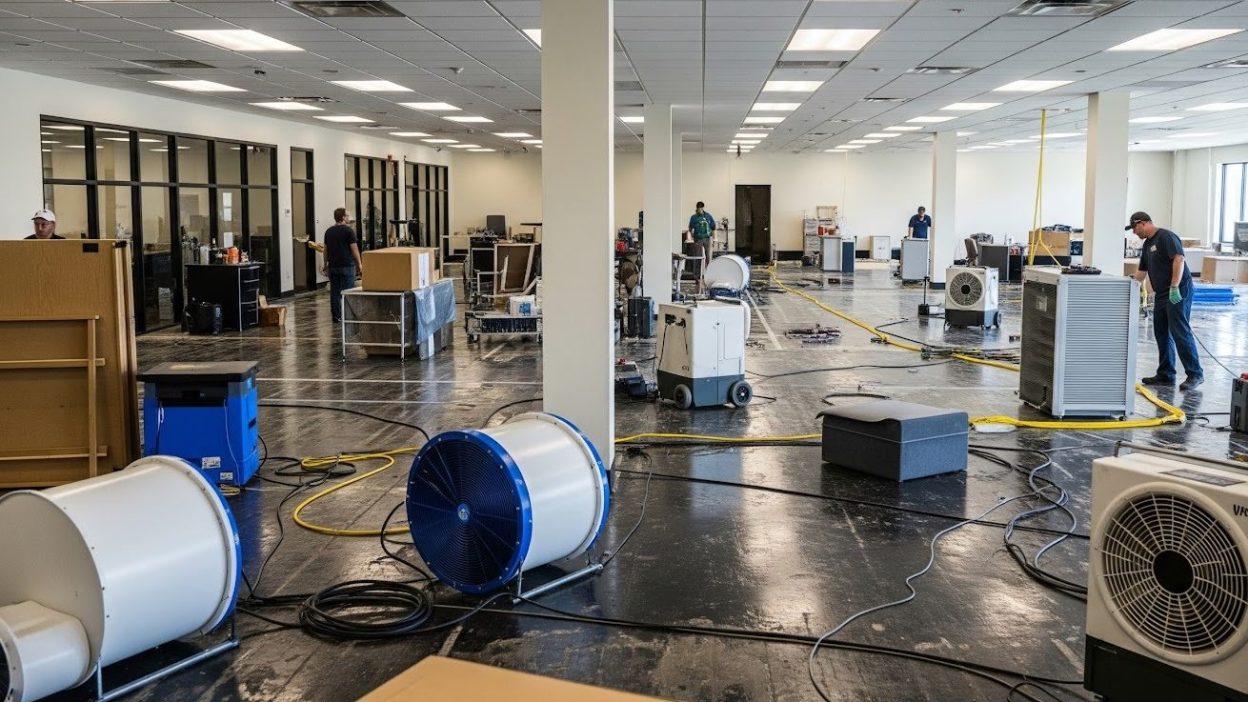
When a pipe bursts or a sprinkler system fails inside a commercial building, the clock starts ticking immediately. Business owners often lose thousands of dollars per day in downtime, spoiled inventory, and structural damage while scrambling to figure out who to call and what to do first. Having a documented commercial water damage prevention plan in Denver, CO is one of the most important steps any property owner or facility manager can take before an incident ever occurs. Pairing that plan with professional commercial water dry out services ensures that when water does strike, your response is fast, organized, and fully documented for insurance purposes.
This guide walks through the core components of an effective water damage response plan, including how to build an emergency contact roster, understand water contamination classifications, and protect your insurance claim from the start.
Why a Written Response Plan Matters
Many business owners assume they will figure out the details when a water emergency actually happens. The problem is that a flooded commercial space demands quick, coordinated action across multiple parties: the building’s facilities team, a licensed restoration contractor, your insurance carrier, and possibly local code authorities. Without a written plan, critical time is lost making decisions under pressure.
According to the Federal Emergency Management Agency (FEMA), flooding is the most common and costly natural disaster in the United States, and commercial properties are just as vulnerable as residential ones. Even non-flood water damage, such as a broken supply line, roof leak, or HVAC condensate overflow, can cause tens of thousands of dollars in damage within hours if not addressed properly.
A response plan does not need to be lengthy. It needs to be accessible, clearly written, and regularly reviewed. The goal is to eliminate confusion and delay in the first 30 to 60 minutes after water damage is discovered.
Building Your Emergency Contact Roster
The first section of any commercial water damage response plan should be a complete emergency contact roster. This list should be printed and posted in a visible location, saved in a shared digital folder, and distributed to all key staff members.
Your roster should include the following contacts at a minimum:
Facilities Manager or Building Superintendent This person should be the first internal contact. They need the authority to shut off the main water supply, access mechanical rooms, and coordinate with outside vendors. If your building uses a property management company, include the after-hours emergency line as well.
Licensed Water Damage Restoration Contractor Having a pre-selected restoration company on your roster eliminates one of the most time-consuming steps after a water event. Look for a company certified by the Institute of Inspection, Cleaning and Restoration Certification (IICRC), which sets the industry standard for water damage mitigation. Pre-establishing a relationship also means the contractor will already understand your property layout and priorities.
Insurance Adjuster or Agent Contact your insurance carrier immediately after stabilizing the situation. Document the adjuster’s direct line rather than the general customer service number. Early notification is often a requirement under commercial property policies, and delays can complicate your claim.
Structural Engineer or Building Inspector For major water events, a structural assessment may be necessary before re-occupying the space. Having a trusted contact ready speeds up this process.
Utilities Provider If water intrusion affects electrical systems, gas lines, or other utilities, you will need to contact the appropriate providers quickly. Know your account numbers and emergency service numbers in advance.
Review and update this roster at least twice per year. Staff changes, contractor relationships, and insurance policies shift regularly, and an outdated contact list can be just as costly as having no list at all.
Understanding Water Classifications and Why They Matter
Not all water damage is treated the same way. Restoration professionals use a three-tier classification system developed by the IICRC to determine the scope of work required. The classification of water involved in your incident will directly affect the cost, timeline, and complexity of the restoration process.
Category 1: Clean Water
Category 1 water originates from a sanitary source and presents no substantial health risk. Common examples include a broken supply line, an overflowing sink with no contamination, or rainwater that has not contacted other substances. Clean water damage can often be mitigated relatively quickly with proper drying equipment and moisture monitoring.
However, Category 1 water can degrade into a higher category within 24 to 48 hours if left untreated. Once it contacts building materials, standing water becomes a breeding ground for microbial growth and contamination.
Category 2: Gray Water
Gray water contains a significant degree of chemical, biological, or physical contamination. It may cause illness or discomfort if exposed to humans. Sources include discharge from washing machines, dishwashers, aquariums, or water that has passed through lightly contaminated materials. In a commercial setting, gray water events often require more aggressive material removal, especially from porous surfaces like carpet and drywall.
Category 3: Black Water
Black water is grossly contaminated and can contain pathogenic agents, toxins, and other harmful materials. Sewage backups and floodwater from outside sources typically fall into this category. Black water events require personal protective equipment for responders, specialized disposal of contaminated materials, and antimicrobial treatment of all affected surfaces. Restoration costs for black water events are significantly higher than clean or gray water events, and timelines are longer.
Understanding these categories helps you communicate clearly with your restoration contractor, set realistic expectations for your staff, and ensure your insurance documentation accurately reflects the nature of the damage. Misrepresenting the contamination category, even unintentionally, can create problems during the claims process.
Documenting for Business Interruption Insurance
One of the most significant financial tools available to commercial property owners after a water event is business interruption insurance. This coverage compensates for lost income and ongoing expenses while your property is being restored. However, maximizing a business interruption claim requires preparation well before any incident occurs.
Insurance carriers increasingly require proof that property owners maintained a reasonable prevention and response plan. This includes documentation of regular maintenance on plumbing systems, HVAC units, and fire suppression systems. It also includes evidence that you responded promptly to the incident and engaged qualified professionals.
Here are several practices that strengthen your position with insurers:
Maintain a maintenance log. Keep written records of all inspections, repairs, and service calls related to water-bearing systems in your building. Note the date, scope of work, and contractor or employee who performed the task.
Photograph conditions regularly. Quarterly or annual walkthroughs with photographs establish a baseline condition for the property. When damage occurs, these photos help demonstrate what existed before the event.
Report incidents promptly. Most commercial policies require notification within a specific timeframe, often 24 to 72 hours. Late notification can reduce or void coverage.
Document the response. Keep a written log of every action taken after discovering damage: when it was found, who was notified, what was done to stop the water, and when the restoration contractor arrived. Timestamps matter.
Request detailed restoration reports. Professional restoration contractors provide moisture readings, drying logs, and scope-of-work documentation. These reports are essential for substantiating insurance claims and demonstrating that the damage was handled according to industry standards.
According to the Insurance Information Institute, water damage accounts for nearly 24 percent of all homeowner and commercial property insurance claims. Business owners who are prepared with documentation consistently recover more of their losses through the claims process.
Putting the Plan Into Practice
Creating the plan is only the first step. The response plan should be tested and reviewed regularly to remain effective. Consider scheduling an annual tabletop exercise with your facilities team, walking through a hypothetical water event scenario to identify gaps in the roster, responsibilities, or documentation processes.
Your plan should also include a section on water shutoff locations. Every key staff member should know where the main water shutoff valve is located and how to operate it. Secondary shutoffs for individual floors or tenant spaces should be mapped and labeled clearly.
Consider integrating leak detection technology into high-risk areas such as server rooms, mechanical spaces, and areas with aging infrastructure. Smart sensors that alert facility managers via text or email can reduce response time significantly.
For businesses located in a region with significant weather risk or aging infrastructure, working with a local restoration expert who knows your area’s specific challenges adds an additional layer of preparedness. You can also find local restoration professionals by searching water damage restoration services near you to identify contractors who are already familiar with regional water damage risks and can respond quickly when time is critical.
Final Thoughts on Commercial Water Damage Preparedness
A commercial water damage response plan is not a luxury reserved for large corporations with dedicated risk management teams. It is a practical tool that any business, from a single-tenant office to a multi-floor commercial building, can build and maintain with modest effort. The cost of creating and updating the plan is negligible compared to the potential losses from delayed response, denied insurance claims, or extended downtime.
The three pillars of an effective plan are clear contacts, accurate damage classification knowledge, and proactive insurance documentation. When these are in place, business owners move from reactive to prepared, and that shift makes a measurable difference in outcomes.
Review your response plan today, update your emergency contact roster, and confirm that your insurance policy reflects your current operations and coverage needs. If your business has not yet established a relationship with a certified restoration contractor, that is the most immediate step you can take to reduce risk.
Frequently Asked Questions
1. How often should a commercial water damage response plan be updated?
At minimum, your response plan should be reviewed twice per year. It should also be updated any time there is a change in key personnel, insurance coverage, building systems, or contractor relationships. An outdated plan can be nearly as problematic as having no plan at all.
2. What is the first thing to do when water damage is discovered in a commercial building?
The immediate priority is to stop the source of water if it is safe to do so. Shut off the main water supply or isolate the affected area. Then notify your facilities manager, contact your pre-selected restoration contractor, and document everything with photos and written notes before any cleanup begins.
3. Does business interruption insurance automatically cover all water damage losses?
Not necessarily. Business interruption coverage is typically tied to physical damage from a covered peril. The scope of reimbursement depends on your specific policy, the cause of the damage, and how promptly you reported the incident. Having a documented prevention and response plan strengthens your claim and may help avoid coverage disputes.
4. How do water contamination categories affect the restoration timeline?
Category 1 (clean water) damage is typically the fastest to restore, often within a few days depending on the extent of saturation. Category 2 (gray water) events may take a week or longer, especially if porous materials need to be removed and replaced. Category 3 (black water) events involve significant decontamination and material disposal, and can take several weeks. The timeline also depends on the size of the affected area and the drying conditions in the building.
5. What certifications should I look for in a commercial water damage restoration company?
Look for contractors certified by the Institute of Inspection, Cleaning and Restoration Certification (IICRC), specifically those holding the Water Damage Restoration Technician (WRT) credential. Additional certifications in applied microbial remediation or applied structural drying indicate a higher level of expertise for complex water damage events. Verify that the contractor carries appropriate licensing and liability insurance for commercial work in your state.